The Story
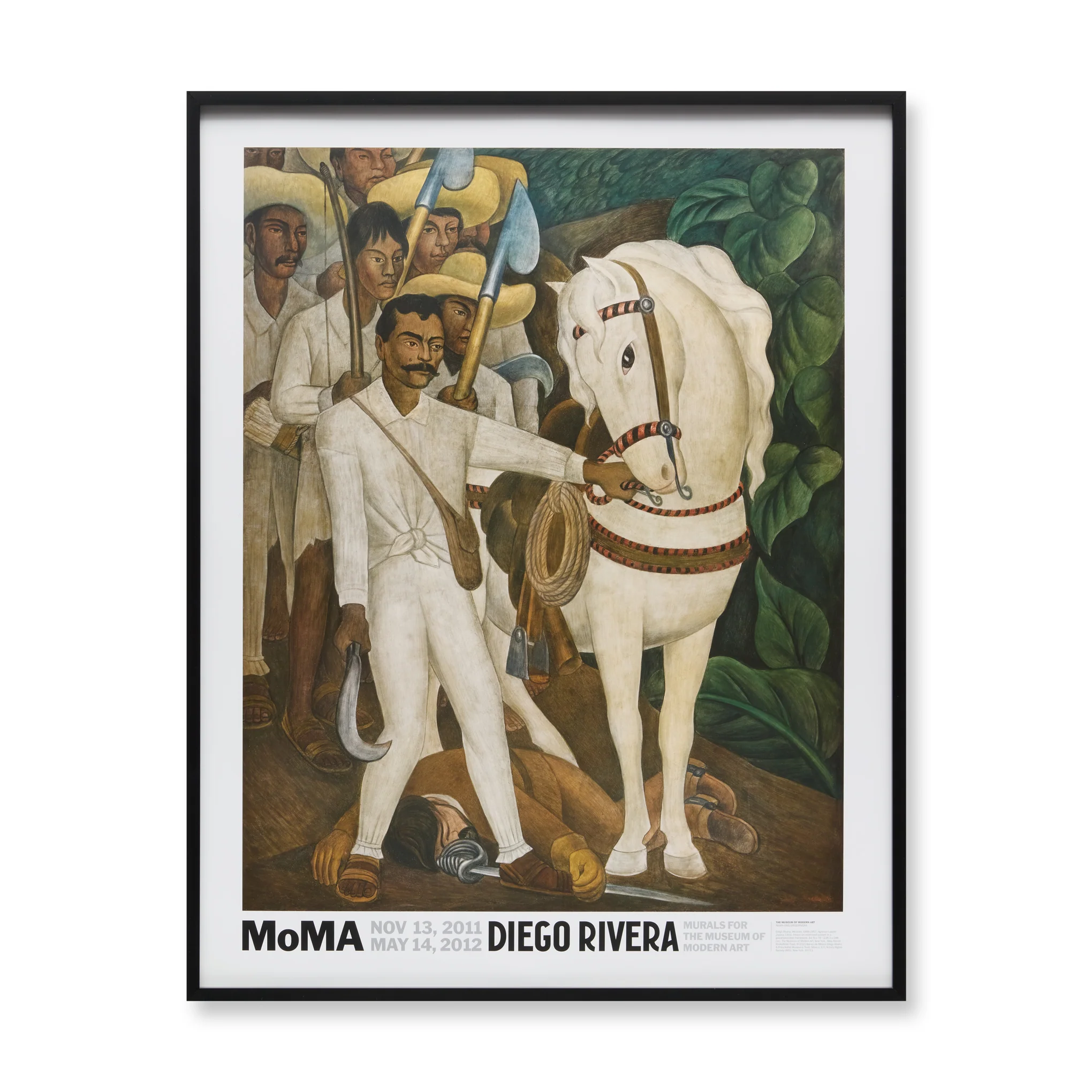
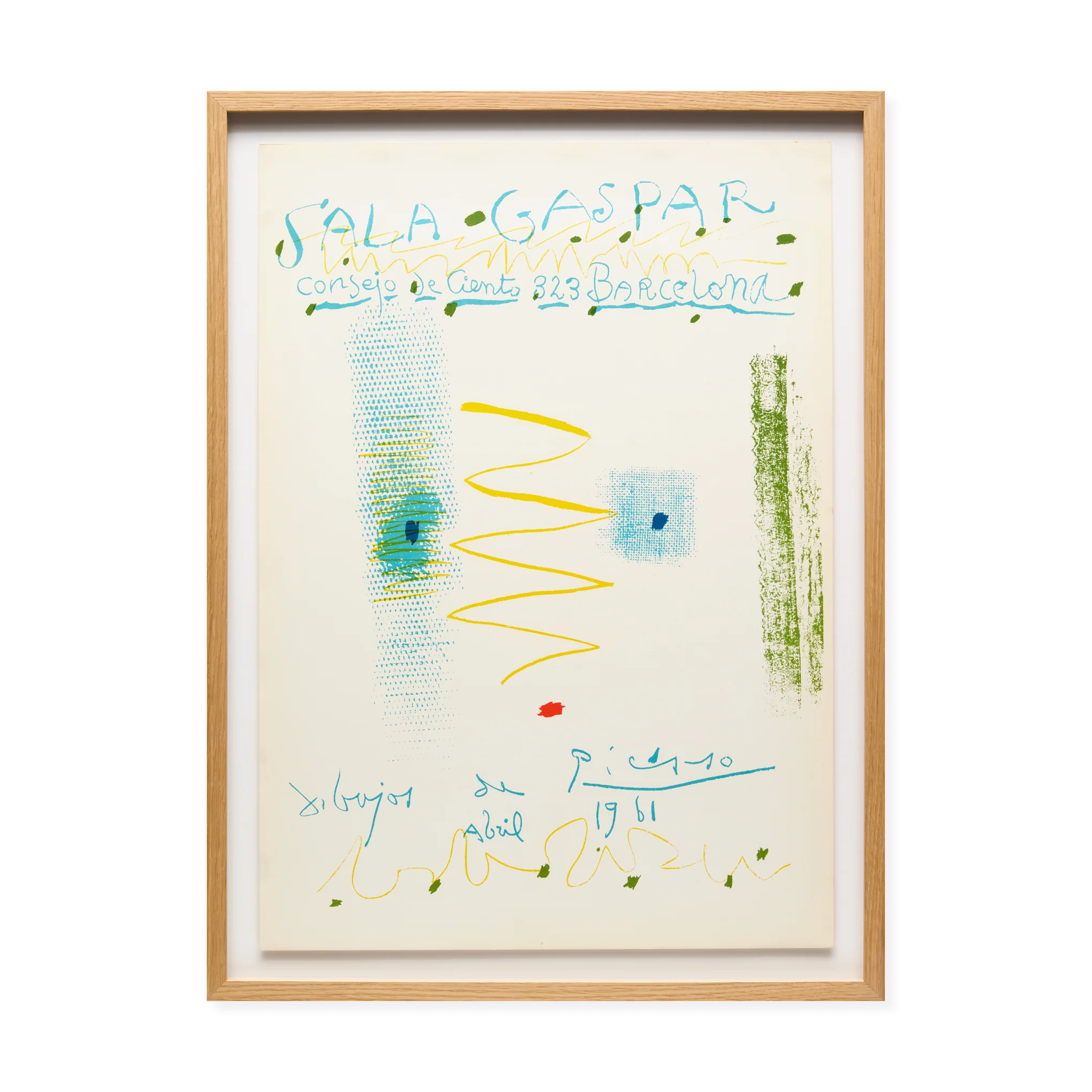
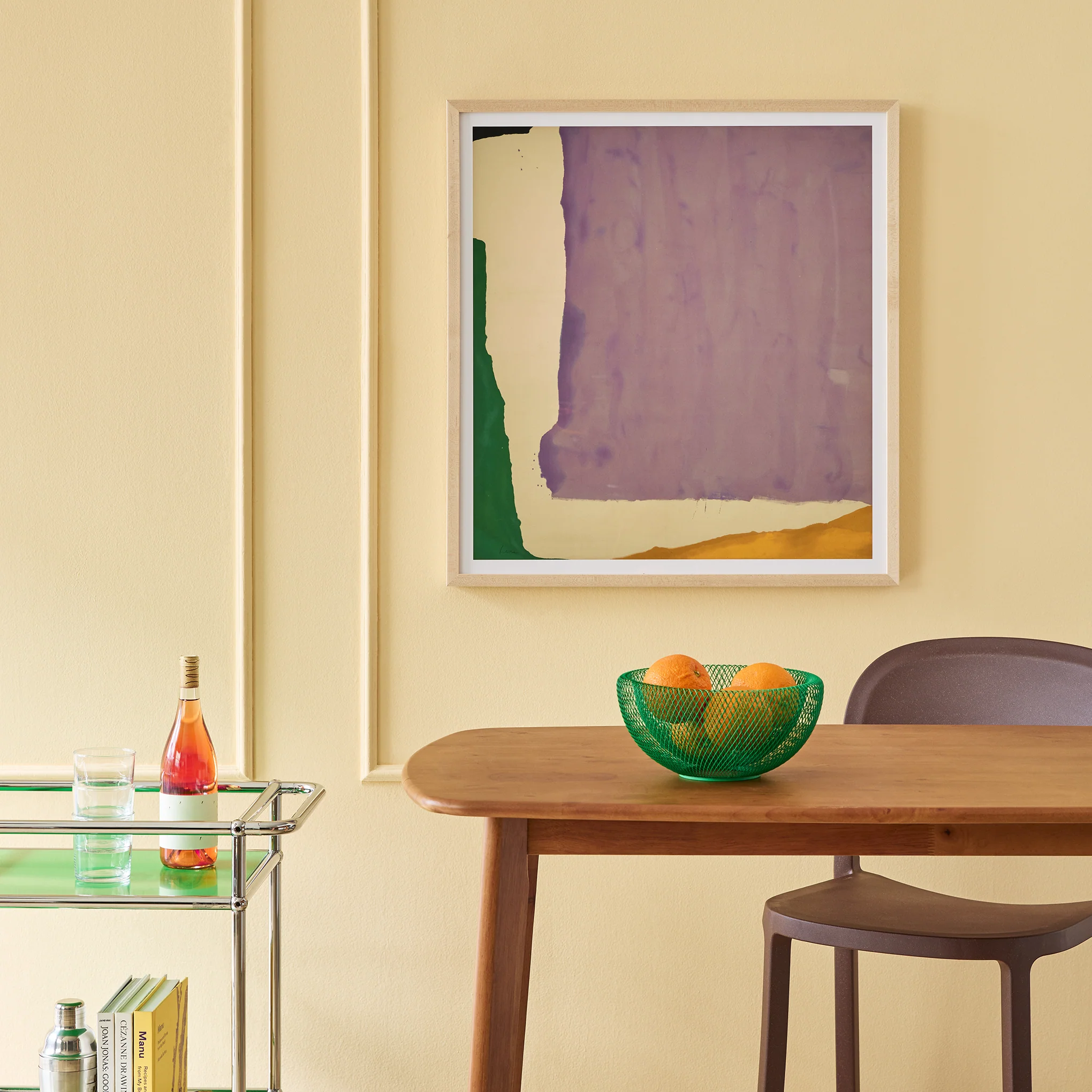
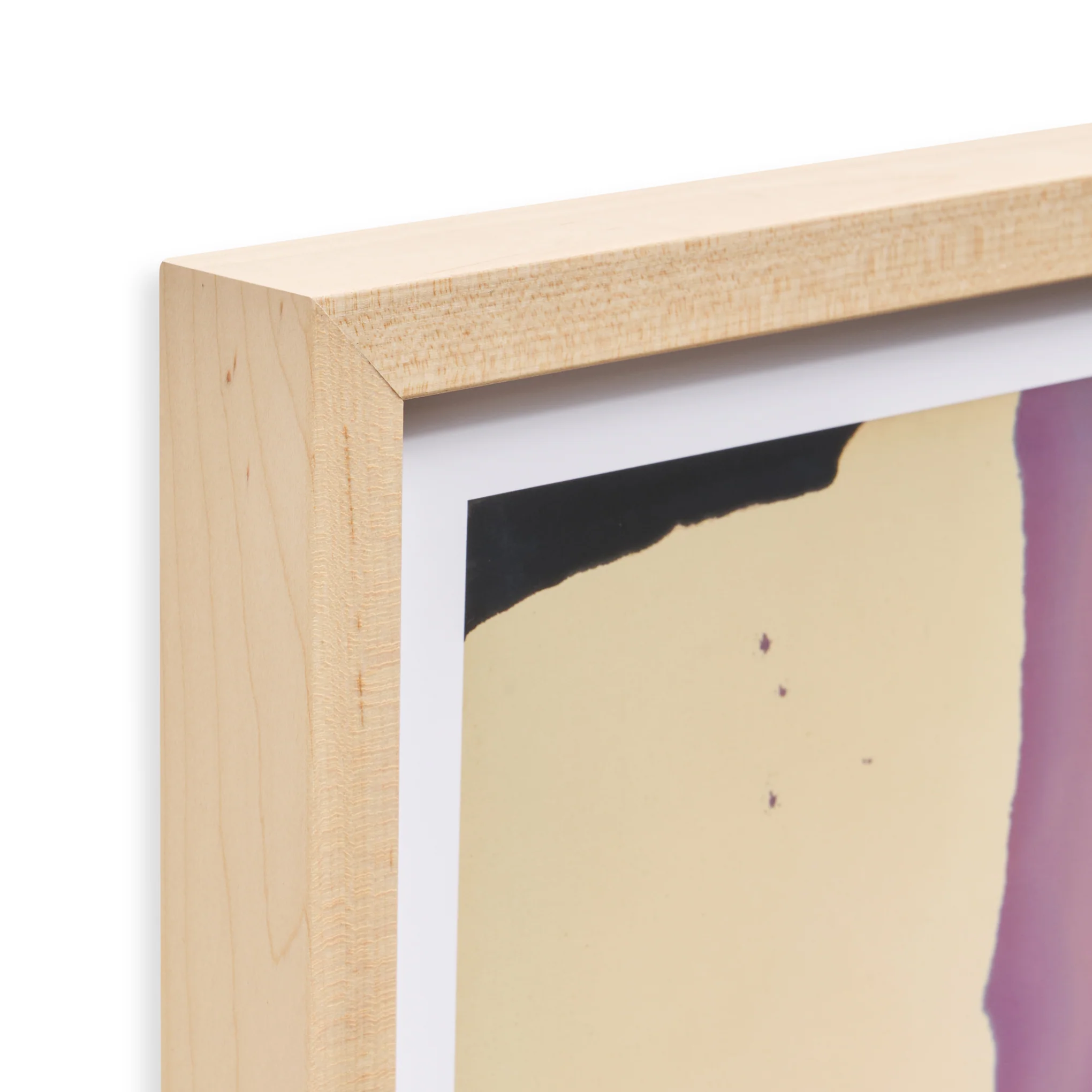
Helen Frankenthaler was an American abstract expressionist painter who was a major contributor to the history of postwar American painting. This poster features a reproduction of Frankenthaler’s 1966 painting Mauve District, an artwork in MoMA’s collection. The poster is framed with a maple wood frame and measures 29h x 27”w.
In 1969 Frankenthaler wrote of Mauve District, “It relates to a theme which appears on-and-off, of pictures that often have one central vast shape, district, or territory; in this case, the shape itself (a square) is a play on the very shape of the canvas.” The artist’s delight in spatial play is also evident in the wedge of exposed raw canvas, a common motif in her work.Although it is a negative space, it also conjures the edge of a tilted square—a form that can be perceived as either advancing or receding in relation to the mauve square it borders. “I have always been concerned with painting that simultaneously insists on a flat surface and then denies it,” Frankenthaler has said.
Details & Craftsmanship
Every detail has been carefully considered to bring you the perfect product.
Details & Craftsmanship
Every detail has been carefully considered to bring you the perfect product.
Description
Helen Frankenthaler was an American abstract expressionist painter who was a major contributor to the history of postwar American painting. This poster features a reproduction of Frankenthaler’s 1966 painting Mauve District, an artwork in MoMA’s collection. The poster is framed with a maple wood frame and measures 29h x 27”w.
In 1969 Frankenthaler wrote of Mauve District, “It relates to a theme which appears on-and-off, of pictures that often have one central vast shape, district, or territory; in this case, the shape itself (a square) is a play on the very shape of the canvas.” The artist’s delight in spatial play is also evident in the wedge of exposed raw canvas, a common motif in her work.Although it is a negative space, it also conjures the edge of a tilted square—a form that can be perceived as either advancing or receding in relation to the mauve square it borders. “I have always been concerned with painting that simultaneously insists on a flat surface and then denies it,” Frankenthaler has said.